

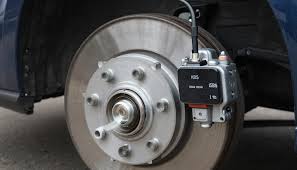
Picture this: a sudden obstacle appears on a wet highway. You slam the brake pedal, and instantly you feel it pulse beneath your foot. That pulsing sensation is known as ABS Testauslösung — the exact moment your Anti-lock Braking System steps in to stop the wheels from locking up.
Instead of letting the tires skid, the system rapidly adjusts brake pressure to keep them rolling. And when your wheels keep rolling, you keep steering. That’s the difference between sliding helplessly and maneuvering safely around danger.
Studies consistently show that ABS shortens stopping distances in many emergency situations and significantly improves directional control during hard braking. So when the pedal vibrates, don’t panic. That vibration isn’t a problem. It’s proof your safety system is doing exactly what it was designed to do.
| Aspect | Detail |
|---|---|
| Full term | Anti-lock Brake Activation (“ABS kick-in”) |
| Also called | ABS engagement, ABS activation, brake intervention |
| Key components | Wheel-speed sensors, Electronic Control Unit (ECU), Hydraulic Control Unit (HCU) |
| Function | Prevent wheels from locking under hard braking |
| Trigger event | Rapid deceleration or slip (e.g. sudden stop, icy road) |
| Visual cue | Pulsating brake pedal, buzzing noise underfoot |
| First introduced | 1978 (Bosch’s first production ABS) |
| Safety impact | Keeps vehicle steerable, reduces crash risk; stops ~10–15% shorter with ABS |
ABS Fundamentals: How It Works
The ABS is a clever network of sensors and valves that automatically pumps your brakes faster than you ever could. When you brake hard, each wheel’s speed sensor monitors how fast that wheel is turning. If one wheel slows abruptly (signaling an impending lock-up), the ABS control unit reacts. It directs the hydraulic control unit (HCU) to quickly reduce brake pressure on that wheel, allowing it to spin freely again. As soon as traction returns, the pressure is reapplied. This cycle of “release and reapply” can happen up to 40 times per second, as Bosch notes, so that wheels never fully lock. The end result is that the car can come to a stop much faster on slippery surfaces, because continuous rotation lets the tires grip the road rather than skid.
The major components are:
- Wheel-speed sensors: Mounted at each wheel hub, these detect wheel rotation speed. They feed real-time data to the ABS controller.
- Electronic Control Unit (ECU): The ABS “brain.” It compares wheel speeds; if a wheel is decelerating too quickly, the ECU knows it’s about to skid and issues a brake-modulation command.
- Hydraulic Control Unit (HCU): A block of valves and a pump (as shown above) that receives ECU commands. It reduces or restores brake pressure to specific wheels dozens of times per second. This rapid cycling is what you feel as the pedal vibrating.
- Brake pedal and you, the driver: Although not a high-tech component, the pedal gives feedback to you. When ABS engages, you feel it pulsing. Instead of slamming your foot down (which would normally lock the wheels), you should maintain firm, steady pressure on the pedal and continue steering. In fact, keeping the pedal pressed hard allows the ABS to do its job properly and often allows you to steer around obstacles that would be unavoidable if the wheels were locked.
When Does ABS Testauslösung Happen?
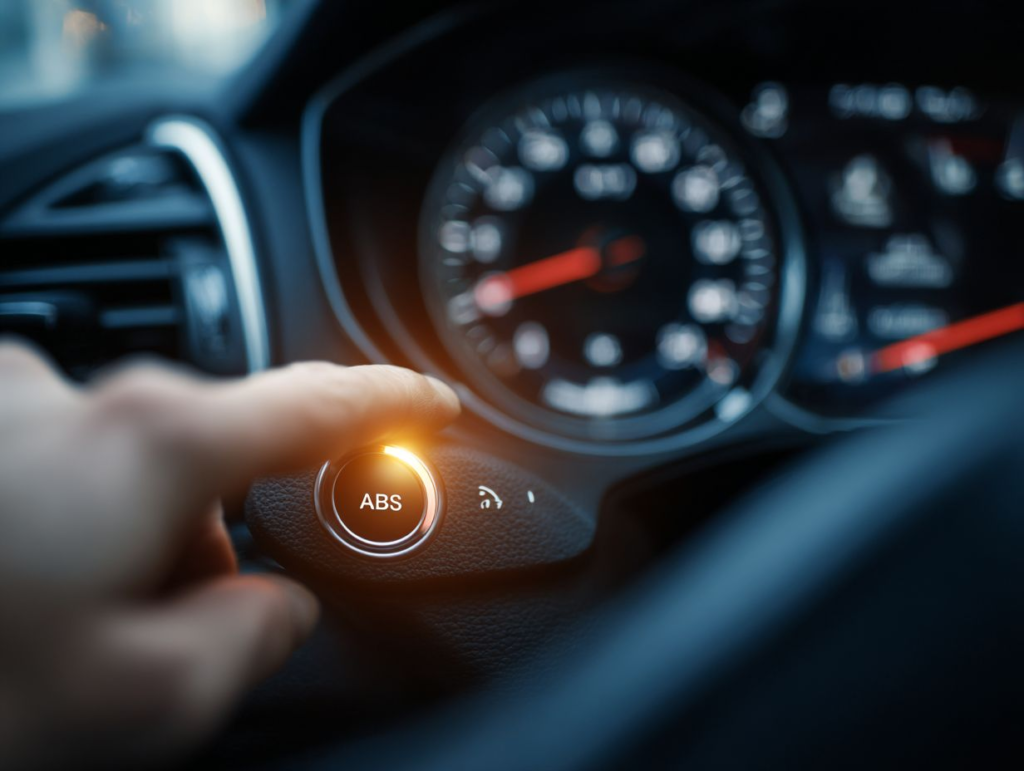
ABS Testauslösung isn’t random – it happens only under certain conditions. Generally, the ABS engages whenever a wheel is about to lock under braking. Typical triggers include:
- Emergency or heavy braking: If you slam on the brakes (for example, braking hard to avoid a collision), ABS usually activates. Verizon Connect notes that “ABS typically engages during sudden or hard braking…like when traffic stops abruptly or an unexpected hazard appears”.
- Low-traction surfaces: Wet, icy, or snowy roads create less friction, so wheels can lock more easily when braking. On slippery asphalt or snow, even moderate braking can trigger ABS pulses to prevent a skid.
- Uneven surfaces: When different wheels grip differently – for instance, one side on dry pavement and the other on gravel – one wheel may lock sooner. In such asymmetric situations, ABS can activate on the slipping wheel(s) to keep the car stable.
- Mechanical or sensor issues: On rare occasions, a faulty wheel sensor or hydraulic problem can mimic a lock-up and cause false ABS engagement.
Common Testauslösung situations often reflect these conditions:
| Scenario | Road Condition/Issue | ABS Reaction |
|---|---|---|
| Emergency stop on wet road | Reduced traction (risk of hydroplaning) | Rapid, uniform pressure pulses to all wheels, maintaining control under heavy slowdown. |
| Braking on ice or deep snow | Very low friction | Frequent, short pulses (high cycle rate) to avoid lock-up, potentially longer stopping distance but with continued steerability. |
| Sudden obstacle at highway speed | High deceleration needed | Maximal ABS intervention – strong modulation to keep wheels rolling while decelerating as much as possible. |
| Uneven grip (left vs. right) | Different surface adhesions | Selective control: ABS may treat each wheel or axle differently to balance braking forces. |
Why ABS Testauslösung Matters
The point of ABS Testauslösung is life-or-death safety. By preventing wheel lock, ABS ensures you retain steering control under hard stops. This has a measurable effect on accident outcomes: studies found that ABS reduces the risk of certain crashes. For example, an NHTSA analysis showed about 14% fewer multi-vehicle crashes on wet roads (and 24% fewer fatal crashes) for ABS cars, as drivers could still steer to avoid collisions. ABS also cut pedestrian/bicycle collisions by roughly 27% in those vehicles. In everyday terms, vehicles with ABS tended to stop about 10–15% faster in emergencies than identical models without it.
However, it’s important to note that ABS doesn’t guarantee the absolute shortest stopping distance in every situation. On very loose gravel or deep snow, a locked wheel can sometimes create a wedge of material that helps brake. In those rare cases, an ABS car might stop a bit later than a locked-wheel skid. The trade-off is that even then, ABS helps the driver control the car’s direction, which greatly outweighs the slight distance penalty. In fact, modern safety research emphasizes that being able to steer while braking saves more accidents than simply minimizing stopping distance.
Bosch summarizes it this way: ABS enables “safe braking” on varied surfaces. It also saves your tires from flat-spot damage during hard stops. In short, ABS Testauslösung transforms a panic brake into a controlled emergency maneuver.
Driving Tips When ABS Engages
When you experience an ABS Testauslösung, remember: stay calm and press firmly. The pulsing brake pedal or buzzing sound is normal. It just means ABS is preventing lock-up. Keep steady pressure on the pedal and drive through the emergency by steering around the obstacle. Do not pump the brakes manually or let up – that only delays stopping and cuts traction.. Also, don’t interpret the pulsating brake pedal as a sign of brake failure; it’s actually a sign of proper functioning. Once the wheels regain grip, the pulsations will stop and braking returns to normal. Afterward, you can rely on the usual anti-lock system, but there’s no special resetting needed – ABS resets itself immediately.
If you notice your ABS light on without any apparent skid, it may indicate a system fault (like a bad sensor or low fluid). Otherwise, trust the ABS: it’s designed to save lives.
History and Evolution
ABS technology has roots going back to the 1920s in aircraft, but for cars it took decades. Bosch developed the first production ABS for Mercedes-Benz in 1978. Early systems were bulky and expensive, but they proved their worth: by the 1980s and ’90s almost all new cars in Europe and the U.S. adopted ABS. Today, ABS is mandatory or standard on virtually all passenger vehicles worldwide. It also paved the way for advanced systems like Electronic Stability Control (ESC), which builds on ABS to prevent skids during steering.
Evolution continues: modern ABS units have shrunk and become faster. Active wheel-speed sensors now work down to 0 km/h and even detect roll and lift angles. The ABS ECU is integrated with vehicle networks, allowing not just anti-lock braking but also traction control and emergency braking assistance. Still, the core moment – the ABS Testauslösung – remains the same vital safety mechanism it has been for decades.
Conclusion
ABS Testauslösung is the life-saving heartbeat of modern braking. In any panic stop, it automatically pulses your brakes to stop wheel lock-up, maintaining steering control when you need it most. This automated “kicking in” of ABS reduces accident risk and often shortens stopping distance. The next time your brake pedal shudders in an emergency, remember: ABS is working, not failing. Keep steady pressure, steer carefully, and let the system do its job. Over time, as crash data show, drivers of ABS-equipped cars have fewer serious accidents, especially on wet or slippery roads. Understanding abs testauslösung – that critical moment of ABS activation – ensures you remain confident behind the wheel and can react correctly to this vital safety feature.
Frequently Asked Questions
What is ABS Testauslösung and when does it occur?
ABS Testauslösung is the moment your anti-lock braking system activates during hard braking. It happens when sensors detect a wheel about to lock up, such as during a panic stop or on ice. The system quickly adjusts brake pressure, which causes the brake pedal to pulse.
Why does my brake pedal pulse and make noise?
When ABS activates, it rapidly opens and closes brake valves. This creates a buzzing sound and a vibrating pedal. It may feel unusual, but it’s completely normal. The system is preventing your wheels from locking so you can keep steering.
Does ABS always shorten stopping distance?
Usually yes, especially on wet or slippery roads. ABS prevents skidding and improves control. On loose gravel or deep snow, stopping distance may slightly increase, but you still gain better steering control, which improves overall safety.
Why did my ABS activate at low speed?
ABS can trigger at low speeds if traction drops suddenly or if a sensor sends irregular data. If it happens often on dry roads, have the system checked. A faulty wheel speed sensor or uneven brake pressure may be the cause.
How can I tell if ABS is working correctly?
The ABS warning light should turn off shortly after you start the car. During a hard stop, you should feel pedal pulsation without wheel lock. If the warning light stays on, get the system inspected.