

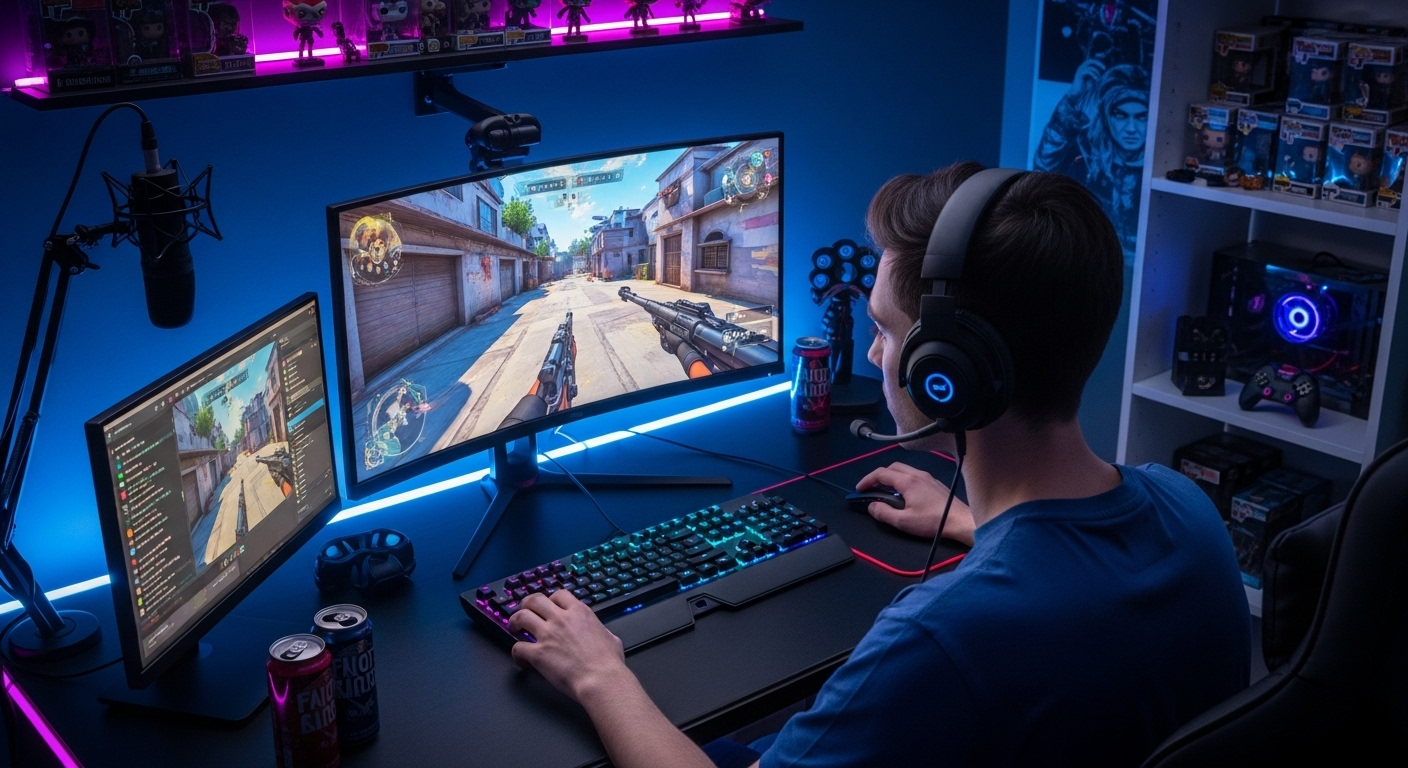
People playing video games are part of everyday life now. You see it at home after work, on phones during commutes, and online late at night. Gaming no longer sits on the fringe of entertainment. It stands at the center of how millions relax, connect, and challenge themselves. The growth is not hype. It is backed by numbers, behavior, and real social change.
Before going deeper, the table below gives a factual snapshot to ground the discussion.
Quick Snapshot of People Playing Video Games
| Dimension | Verified Facts |
|---|---|
| Global player base | Over 3.2 billion people worldwide |
| Average age | Early 30s |
| Gender distribution | Nearly balanced |
| Most used device | Mobile phones |
| Primary motivation | Entertainment and stress relief |
| Industry value | $180+ billion annually |
Who Are People Playing Video Games Today
People playing video games come from nearly every demographic group. The idea that gaming belongs only to children no longer holds. Adults form the largest share of players, and older age groups continue to grow year by year.
Age patterns show a clear spread. Teenagers play competitively and socially. Adults often play in short sessions to unwind. Older players use games for mental engagement and relaxation. Gender participation is also close to equal, which reflects broader access and changing cultural norms.
Platform choice tells another important story. Mobile gaming dominates because it fits modern schedules. Console gaming thrives in shared spaces like living rooms. PC gaming remains strong among competitive and creative players. Together, these platforms explain why people playing video games now do so across many moments of daily life.
Why People Playing Video Games Keep Engaging
People rarely commit time to something without a clear payoff. Gaming delivers several, often at once. Fun sits at the core, but it is not the only driver.
Games offer immediate feedback. You try something, fail, adjust, and improve. That loop keeps the brain engaged. Many players describe gaming as mentally refreshing, not draining. Surveys consistently show that a large majority of players feel less stressed after playing.
Social connection also plays a major role. Online games allow people to talk, cooperate, and compete regardless of location. For many adults, gaming replaces older social routines that no longer fit busy schedules.
There is also a strong sense of progress. Games reward effort visibly. Levels, rankings, and achievements give structure that everyday life sometimes lacks.
The Social Reality of People Playing Video Games
People playing video games are often deeply social. Multiplayer titles, voice chat, and online communities have turned gaming into a shared experience. Players plan sessions, form teams, and build long-term friendships.
A practical example makes this clearer. A group of professionals in different countries meet through an online cooperative game. They schedule weekly sessions, communicate constantly, and gradually build trust. Over time, the game becomes a social anchor rather than just entertainment. This pattern appears repeatedly across gaming communities.
Families also game together more than before. Parents play with children, siblings compete, and couples share gaming as a hobby. Gaming now fills a social role once held by board games or television.
Cognitive Effects of People Playing Video Games
Games demand attention, memory, and quick decision-making. Research consistently links moderate gaming with improvements in reaction time and visual processing. Strategy games strengthen planning and resource management. Puzzle games reinforce logic and pattern recognition.
Learning often happens indirectly. Players manage limited resources, adapt to changing rules, and cooperate under pressure. These skills translate well beyond the screen. This explains why simulations and serious games appear in education, training, and therapy.
The key factor is moderation. Short, focused sessions tend to produce benefits. Excessive play can reverse those gains.
Mental Health and Emotional Impact
People playing video games often report emotional benefits. Games provide distraction during stress, a sense of control, and moments of achievement. Many players say gaming helps them cope with anxiety or low mood, especially when combined with social interaction.
However, problems arise when balance disappears. Late-night gaming can disrupt sleep. Very long sessions may replace real-world responsibilities. These outcomes are linked to overuse, not gaming itself.
Healthy habits matter. Regular breaks, physical movement, and clear time limits keep gaming supportive rather than harmful.
Economic and Cultural Influence
People playing video games drive one of the largest entertainment industries in the world. Gaming now generates more revenue than film and music combined. Beyond money, it shapes culture.
Streaming platforms turn gameplay into performance. Esports competitions fill stadiums and attract millions of viewers. Game soundtracks influence music trends. Fashion brands collaborate with game franchises. Language from games enters everyday speech.
The table below highlights this impact.
Economic and Cultural Impact of Gaming
| Area | Current Scale |
|---|---|
| Annual global revenue | $180+ billion |
| Esports audience | 500+ million viewers |
| Full-time jobs | Millions worldwide |
| Streaming creators | Tens of thousands |
Case Study: From Casual Player to Professional Skill Builder
Consider a university student who plays games casually. Over time, they start streaming gameplay. They learn video editing, audience communication, and scheduling. Eventually, they earn sponsorships and freelance opportunities. Gaming becomes a platform for skill development, not just leisure.
This pathway is not universal, but it is increasingly common. People playing video games now engage with an ecosystem that rewards creativity, consistency, and communication.
Clearing Common Misunderstandings
Many outdated beliefs still surround gaming. Players are often labeled as antisocial, unproductive, or immature. Data contradicts these claims. Most gamers are socially connected, employed, and active in other areas of life.
Gaming does not replace reality for most players. It complements it.
The Future of People Playing Video Games
Technology continues to push gaming forward. Cross-platform play removes barriers. Virtual and augmented reality expand immersion. Accessibility features bring more players in. Educational and workplace applications grow steadily.
People playing video games will likely increase in number and diversity. Gaming fits modern life because it adapts to time constraints, social needs, and digital habits.
Frequently Asked Questions
Are video games only popular with children and teenagers
No. Adults make up the largest portion of gamers today. Many players are in their 30s and 40s, and older adults continue to join as games become more accessible and casual-friendly.
Can playing video games actually be good for you
Yes, when done in moderation. Research shows benefits such as improved reaction time, problem-solving skills, stress reduction, and social connection, especially in multiplayer or cooperative games.
Do video games negatively affect mental health
They can, but mainly when usage becomes excessive or disrupts sleep and daily responsibilities. For most players, moderate gaming has neutral or positive effects on mood and emotional well-being.
Is gaming a social activity or a solitary one
Gaming is highly social for many players. Online multiplayer games, voice chat, and gaming communities allow people to communicate, cooperate, and form long-term friendships across distances.
How much time should someone spend playing video games
There is no single rule that fits everyone. A healthy approach is one where gaming fits alongside work, study, sleep, physical activity, and relationships without replacing them.
Final Perspective
People playing video games reflect broader changes in how society uses technology. Gaming offers fun, connection, challenge, and learning in a single format. When approached with balance, it supports mental engagement and social life rather than harming it.
Gaming is no longer a question of whether people play. The real question is how they choose to play and what they gain from it.