


Major trends in technology togtechify describes how modern technologies no longer evolve separately. Instead, they merge into unified systems that drive efficiency, scale, and trust. Businesses don’t win by adopting AI, cloud, or security alone. They win by connecting them into workflows that actually run day-to-day operations.
This article explains what is real, deployed, and measurable right now. No fluff. No speculation. Just the major trends in technology togtechify that are shaping how products, platforms, and organizations function.
| Aspect | Current Reality |
|---|---|
| Core idea | Technology trends operate as an integrated system |
| Timeframe | 2024–2026 deployments |
| Primary drivers | AI, Cloud, Data, Security, Automation |
| Business impact | Faster execution, lower risk, scalable growth |
| Adoption signal | Enterprise-wide, not pilot-stage |
Major trends in technology togtechify: why convergence matters
Technology used to move in silos. Teams bought tools, deployed them locally, and optimized in isolation. That model no longer works because systems are distributed, users are remote, and data flows constantly.
Major trends in technology togtechify matter because each trend amplifies the others. AI depends on clean data. Data depends on cloud scale. Cloud expands the attack surface. Security must adapt continuously. When one piece breaks, the system slows or fails.
How togtechify changes decision-making
Togtechify thinking shifts focus from tools to outcomes. Instead of asking “Should we adopt AI?”, leaders ask “Which workflow becomes faster, safer, or cheaper if AI, cloud, and automation work together?” That framing avoids wasted spend and accelerates value.
Major trends in technology togtechify: artificial intelligence moves into execution
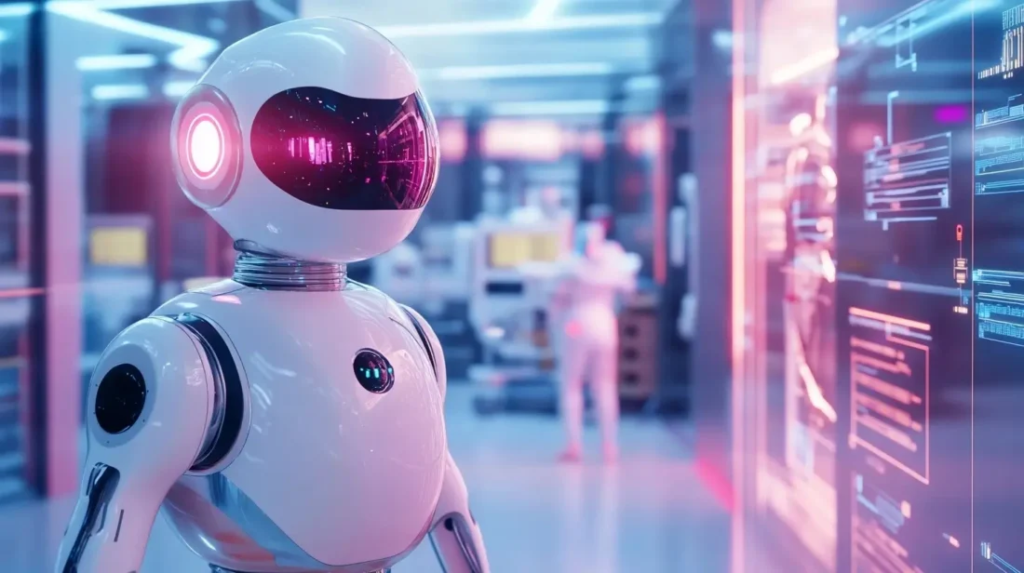
AI is no longer experimental. It sits inside everyday business tools, shaping how work gets done. The real shift is not smarter models, but where AI is applied.
AI as a workflow engine
AI now supports decision-heavy processes rather than replacing humans outright. It summarizes information, suggests actions, and reduces cognitive load. This makes teams faster without sacrificing accountability.
- AI copilots embedded in CRM, IDEs, and support tools
- Predictive models guiding operations, not just reporting
Case example: In customer support, AI drafts responses and pulls policy context. Agents still decide. Resolution time drops. Consistency improves.
Major trends in technology togtechify: cloud and edge form the operating backbone
Cloud adoption is no longer a migration story. It’s an operating assumption. What’s changed is how cloud and edge computing split responsibilities.
Cloud for scale, edge for immediacy
Cloud handles aggregation, analytics, and training. Edge handles latency-sensitive actions. Together, they enable real-time systems without sacrificing global insight.
- Hybrid and multi-cloud architectures are now standard
- Edge computing supports factories, retail, and logistics
Reality check: Systems that rely only on centralized cloud struggle with latency and resilience. Edge-first designs fix that.
Major trends in technology togtechify: IoT and connectivity turn assets into signals
IoT is not consumer gadgets. It’s infrastructure visibility. Sensors convert physical activity into data that software can reason over.
From monitoring to prediction
The biggest shift is moving from “seeing what happened” to “knowing what will happen.” IoT data feeds AI models that predict failures, delays, or risks before they occur.
- Equipment health monitoring in manufacturing
- Asset tracking across supply chains
Case example: Vibration and temperature sensors detect early failure signs. Maintenance becomes scheduled, not reactive. Downtime drops.
Major trends in technology togtechify: zero trust replaces perimeter security

Security models built on networks no longer work. Users, devices, and workloads operate everywhere. Zero Trust treats every access request as untrusted until verified.
Continuous verification, not one-time login
Zero Trust systems evaluate identity, device health, location, and behavior continuously. Access adapts in real time as risk changes.
- Identity-first access control
- Least-privilege permissions by default
Practical impact: Stolen credentials alone no longer grant full access. Breaches shrink instead of spreading.
Major trends in technology togtechify: data becomes an active asset
Data stopped being a reporting artifact. It now drives live decisions. The value lies not in volume, but in speed and reliability.
From dashboards to decisions
Modern data platforms support streaming, prediction, and automation. Teams don’t wait for monthly reports. Systems react immediately.
- Real-time analytics for fraud and demand
- Self-service insights across teams
Key insight: AI fails without trusted data. Data governance is now a growth enabler, not bureaucracy.
Major trends in technology togtechify: automation and DevOps make innovation repeatable
Innovation without delivery discipline collapses. Automation ensures ideas reach users quickly and safely.
Software as a continuous process
DevOps turns development, testing, deployment, and security into one loop. Automation removes friction and human error.
- Infrastructure defined and versioned as code
- Continuous integration and deployment pipelines
Outcome: Teams ship smaller changes more often. Failures are easier to detect and reverse.
Major trends in technology togtechify: immersive computing finds real use
AR and VR move beyond novelty when they solve costly or risky problems. Training, design, and remote collaboration benefit most.
Immersion as a productivity tool
Virtual environments reduce travel, speed learning, and improve spatial understanding. The value comes from efficiency, not entertainment.
- VR-based safety and skills training
- AR-assisted remote maintenance
Case example: Technicians receive AR overlays from experts. Repairs finish faster. Errors decline.
Major trends in technology togtechify: sustainability shapes system design
Energy use and emissions are now design constraints. Compute-heavy systems must justify efficiency.
Green tech as operational discipline
Sustainability shows up in architecture choices, not slogans. Efficient code, smarter scheduling, and renewable-powered infrastructure matter.
- Energy-efficient data centers
- Performance-per-watt hardware decisions
Reality: Sustainable systems are often cheaper to operate at scale.
Major trends in technology togtechify: how leaders apply them correctly
Success doesn’t come from chasing trends. It comes from sequencing them.
Practical execution principles
Start with identity and data foundations. Then layer AI, automation, and optimization. Measure outcomes relentlessly.
- Focus on one workflow at a time
- Secure systems by design, not patchwork
Result: Technology compounds instead of conflicting.
FAQs:
What does “major trends in technology togtechify” mean in simple terms?
Major trends in technology togtechify means modern technologies work together as one system, not as isolated tools. AI, cloud, data, security, and automation reinforce each other. When integrated properly, they deliver faster results, better decisions, and stronger resilience.
Why are major trends in technology togtechify important for businesses today?
Business systems are distributed, data-driven, and always online. Isolated technology creates gaps and risk. Major trends in technology togtechify matter because only integrated systems scale securely, especially with remote work, cloud platforms, and real-time data.
How does AI fit into major trends in technology togtechify?
AI acts as the intelligence layer inside workflows. It relies on cloud scale, trusted data, and strong security to function correctly. Without togtechify integration, AI produces limited or unreliable outcomes instead of real business value.
Is togtechify relevant for small companies or only enterprises?
Togtechify applies to organizations of all sizes. Cloud services and automation make integration affordable for startups and SMBs. Even small teams benefit when data, security, and deployment pipelines are aligned from the beginning.
What is the biggest mistake companies make with togtechify?
The biggest mistake is adopting tools without redesigning workflows. Buying AI or cloud platforms alone doesn’t create value. Major trends in technology togtechify succeed when technology is aligned to real processes, not hype or vendor promises.
Conclusion:
Major trends in technology togtechify point to one truth: modern systems succeed through integration. AI, cloud, IoT, security, and automation form a single operating model. When designed together, they create speed, resilience, and trust.
The organizations that win won’t adopt the most tools. They’ll connect the right ones, apply them to real workflows, and keep improving. That’s togtechify in practice.