

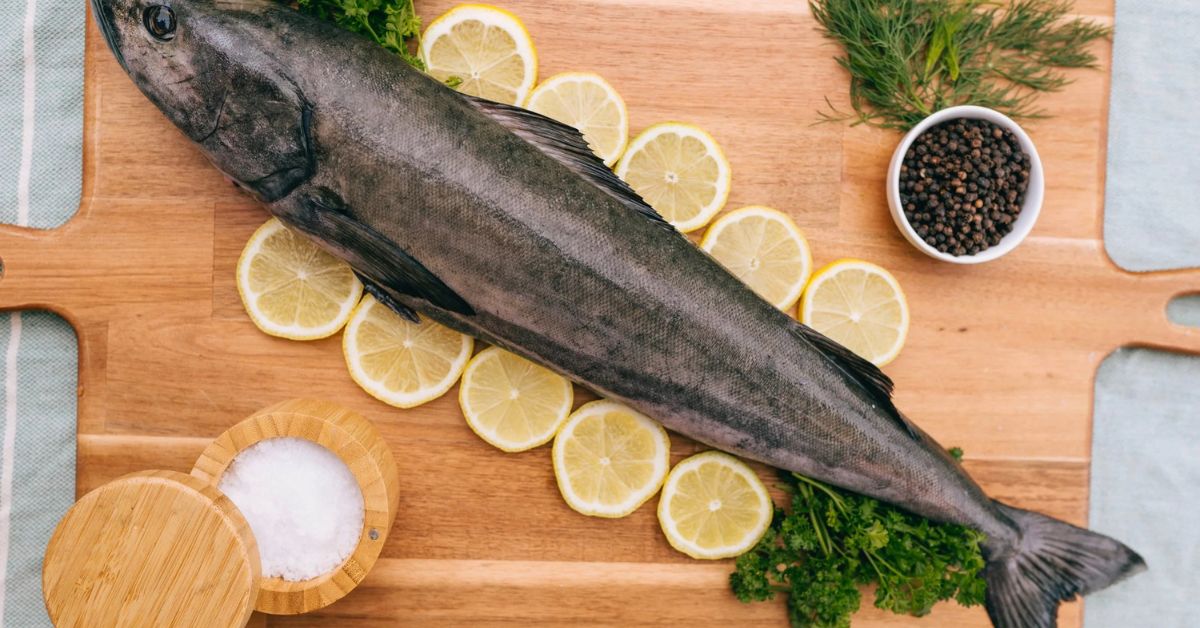
Black cod (also known as sablefish or “butterfish”) is a deepwater Pacific fish prized for its buttery flavor and high omega-3 content. It is not a true cod but the sole member of the genus Anoplopoma, family Anoplopomatidae. Native to cold North Pacific waters from California up through Alaska to the Bering Sea, black cod has sleek, dark skin and thick, juicy white fillets. With its velvety texture and richness, this fish easily became a gourmet favorite (think Nobu’s famous miso-marinated “Black Cod with Miso” dish).
To help you get to know this remarkable fish, the table below summarizes key facts at a glance:
| Characteristic | Black Cod (Sablefish) |
|---|---|
| Scientific name | Anoplopoma fimbria |
| Common names | Black cod, Sablefish, Butterfish, Beshow, Skil, Coalfish |
| Family | Anoplopomatidae (only species A. fimbria) |
| Habitat | Deep Pacific Ocean (650–9000 ft deep) |
| Range | Northeast Pacific: Northern Mexico to Bering Sea |
| Size | Up to ~3 ft long (record ~1 m, 16 kg) |
| Lifespan | Up to ~90 years (often 20–25 years for harvested fish) |
| Oil Content | Exceptionally high (≈20× Atlantic cod) |
What Is Black Cod (Sablefish)?
Black cod (sablefish) is an oily, white-fleshed fish native to the deep waters of the North Pacific. It looks somewhat like Atlantic cod in shape, which is how early European settlers coined the name “black cod” – it was basically a black-colored cod-like fish. In reality, however, black cod belongs to its own unique genus. NOAA explains that “Sablefish, also known as black cod, is a tasty, buttery fish highly valued on the seafood market”. Unlike true cod, Anoplopoma fimbria has no relation to cod – it is the only species in its genus.
Black cod’s skin is dark blue-black (hence the name), with a creamy white flesh inside. It has large, moist flakes when cooked and a rich oil content in its muscle that gives it an indulgent buttery taste. Chefs often call it “butterfish” for this reason. In fact, the only true fish texture comparable is Chilean sea bass, but black cod’s flavor is uniquely its own. Despite the name confusion, you won’t find black cod in fish and chips – it’s a luxury fish that became a sushi-restaurant staple (thanks to Nobu and Japanese cuisine) rather than a cheap everyday cod.
Nomenclature
In Japan, black cod is known as “gindara” and has long been a prized fish there. In English-speaking North America, fisheries managers tried renaming it “sablefish” mid-20th century, but the popular name “black cod” stuck in markets and restaurants. Today you’ll see both names used. What matters most is that “black cod” always refers to this rich Pacific sablefish.
Biological profile
Black cod is slow-growing and long-lived. Wild fish can live decades – up to 90 years – under the sea. Adults reach roughly 2–3 feet in length and can weigh 10–15+ kg (record ~16 kg). Females grow larger than males. They mature slowly: females spawn for the first time around 6–7 years old (at ~2 ft long), males by age 5.
Black cod lives at great depths – usually on muddy sea floors far from shore. Juveniles are more pelagic and roam from nearshore to deep waters, while adults settle in depths from about 650 feet down to 3,000–9,000 feet. In fact, young sablefish are highly migratory: scientific tagging shows they can travel over 1,000 miles in a few years. The species’ range spans the northeastern Pacific – from California and Mexico, all the way up through British Columbia and Alaska, to the Aleutians and Bering Sea. All told, there are two main population groups (northern and southern), though they mix around Vancouver Island and Washington waters.
Quick facts:
- Depth: Adults live at 650–9,000 ft depth.
- Diet: They eat fish, squid, octopus, crustaceans, and even jellyfish.
- Reproduction: Sablefish spawn in winter (Jan–Apr) along continental slopes. Larvae float upward to surface waters after hatching, and juveniles return to deep water by fall.
- Longevity: Unlike many seafood species, black cod grows slowly and can reach ~90 years of age (though most commercial catch is <20 years old).
These life-history traits (long life, slow growth, deep-sea habitat) mean sablefish are vulnerable to overfishing unless managed carefully. Luckily, West Coast fisheries have put strict science-based rules in place to protect them (see “Sustainability” below).
Rich in Omega-3: Nutrition and Health Benefits
Sablefish’s high oil content not only creates its buttery taste, but also packs a nutritional punch. A serving of black cod delivers lots of healthy fats, protein, and B vitamins, with virtually no carbs. For example, a 3-ounce (85 g) portion of wild Alaska sablefish contains roughly 15 g protein, 1.2 μg vitamin B12 (over half the daily value), and about 1,543 mg of omega-3 fatty acids. It has zero carbohydrates. See below for a quick nutrient breakdown:
| Nutrient (per 85 g / 3 oz) | Amount | Notes |
|---|---|---|
| Protein | 15 g | Lean protein source |
| Vitamin B12 | 1.2 μg (51% DV) | Very high B12, good for energy/nerve health |
| Omega-3 Fatty Acids (EPA+DHA) | 1,543 mg | Heart- and brain-healthy fats (see below) |
| Carbohydrate | 0 g | Gluten-free, low-carb |
Health benefits
The omega-3s in black cod are associated with many wellness perks. They support heart health (lowering triglycerides and inflammation), brain function (memory, mood), prenatal development, and even immune function. Eating omega-3-rich fish is widely recommended by nutritionists. Black cod’s healthy fat content also makes it a great protein choice for diets like paleo or keto. Other nutrients in sablefish (like vitamin D, selenium, B vitamins) further round out its benefits, though those are present in typical fish amounts.
- Heart and brain: The EPA and DHA in black cod help maintain healthy circulation and cognitive performance.
- Low in contaminants: Wild sablefish has very low pollutants (PCB levels are extremely low), making it a safe choice compared to some farmed fish.
- Protein: At ~15 g per 3 oz, it’s a good lean protein for muscle repair.
In short, you can feel good about eating black cod. It’s a nutritionally dense, sustainable protein (in its wild-caught form) that tastes indulgent while nourishing your body.
Culinary Use: Flavor and Cooking Tips
Black cod’s rich oil and tender flakes make it a chef’s delight. Its flavor is mild, buttery and sweet, and the flesh holds up well to many cooking methods. It doesn’t taste “fishy” like some white fish; instead it melts in your mouth. Because of its oiliness, you almost cannot overcook black cod – it stays moist and flaky even if it’s slightly past done. No wonder restaurants love it.
Imagine a luxuriously glazed, flaky fillet that practically dissolves when you bite – that’s black cod. Renowned chef Nobu Matsuhisa famously introduced many to its magic with “Black Cod with Miso”, a sweet-savory marinade recipe that caramelizes beautifully. Following in Nobu’s footsteps, home cooks now marinate sablefish in teriyaki, soy-ginger, garlic-butter, or citrus-based sauces. Try these popular approaches:
- Miso-Glazed: Brush fillets with a mixture of sake, mirin, sugar and miso paste (Nobu’s style). Broil or roast until the glaze bubbles and browns. This yields a rich umami crust.
- Pan-Seared: Sprinkle simply with salt, pepper and a touch of lemon or dill. Sear skin-side down in a hot skillet for crispy skin, then flip to cook through.
- Roasted/Baked: Coat in olive oil and herbs, bake at 375°F for 10–12 minutes. The fish stays moist and flaky.
- Steaming/Poaching: Because black cod is so forgiving, you can gently steam it or poach it in broth for an extra-tender result.
- Grilled or Smoked: If you like smoky flavors, grill sablefish on cedar planks or smoke it lightly. Its oil content helps it take smoke and maintain moisture.
Overall, versatile Anoplopoma fimbria pairs well with Asian and Mediterranean flavors alike. It also stands up to side dishes – imagine it alongside roasted vegetables, rice pilaf, or on a hearty salad.
Cooking Tips and Fun Facts
- Easy to cook: One cooking blog advises, “be assured, Black Cod is so buttery that one simply cannot overcook it”. That means even novice cooks can succeed.
- Buttery texture: Often called “butterfish” for its luxurious mouthfeel. Great for people who shy away from “fishy” flavor.
- Chunky flakes: The fillets break into large, chunky pieces, making it great for fish tacos, salads, or as a center-of-plate.
- Signature dishes: Besides miso cod, black cod is popular in dishes like sablefish chowder, en papillote with herbs, or even fish tacos and sandwiches.
In Japan, black cod (gindara) has long been grilled with salt or miso. In North America, its popularity exploded in upscale dining circles, but you can now find frozen wild sablefish in many supermarkets. Thanks to its adaptability, you’ll see recipes from simple weeknight dinners to gourmet presentations.
Fisheries and Sustainability
Given its popularity and slow growth, responsible management is key. Happily, both U.S. and Canadian fisheries have put black cod under strict quotas and monitoring. On the U.S. West Coast, sablefish (black cod) is part of the managed groundfish fishery overseen by the Pacific Fishery Management Council (PFMC). Catch limits are set by science each year, and fishing seasons/shutdowns protect spawning fish. The result: abundant stocks under stringent rules.
Wild-caught
All U.S. black cod is wild-caught (mostly by longline or pot gear). This means no farm inputs (no feed, fertilizers, antibiotics). NOAA notes that wild-sablefish “requires no arable land, no precious fresh water, nor any antibiotics to produce” – a big environmental plus.
Certified sustainable
The Alaska and West Coast sablefish fisheries are MSC-certified (Marine Stewardship Council) and highly rated by Seafood Watch. In fact, West Coast black cod is considered a “Best Choice” sustainable seafood. Alaska sablefish is also certified by Alaska Responsible Fisheries Management. These certifications mean the fishery meets rigorous standards for stock health, habitat protection, and management.
Local catch
Fishing happens locally on the Pacific coast, so supply chains are shorter (“food miles” are low). This helps keep the fish fresher and reduces carbon footprint relative to imports.
Rebuilt stocks
Canada had a classic overfishing scare in the 1980s but responded with quotas. Now both Alaska and Canada report stable sablefish populations. U.S. landings have been steady, and surveys show a healthy population.
Overall, experts call black cod a success story in sustainable fishing. U.S. regulators even label wild sablefish as a “smart choice” because of this strong management. Buying wild Pacific black cod means supporting these well-managed fisheries. Just look for labels or ask your fishmonger about origin – Alaska sablefish is a particularly high-standard product.
Comparison: Black Cod vs. Other Fish
To put things in perspective, here’s how black cod stacks up against some familiar fish, especially in omega-3 content:
| Species | EPA+DHA Omega-3 (per 100g) |
|---|---|
| Black Cod (Sablefish) | ~1,792 mg (very high) |
| Wild King Salmon | ~900 mg (roughly half of black cod) |
| Atlantic Cod | ~180 mg (about one-tenth of black cod) |
Black cod truly leads the pack in omega-3, even surpassing famously oily salmon. It also matches or exceeds popular fatty fish in heart-healthy fats. Meanwhile, compared to its distant “namesake” Atlantic cod, black cod is far richer in oil. In taste and texture, black cod is closer to rich whitefish like halibut or sea bass, but with a fattier, buttery kick.
As a protein source, black cod is comparable to salmon (15–17g per 3 oz) and beef (20–25g per 3 oz), but with much less saturated fat. It’s an excellent choice if you want the omega-3 boost without the higher calories of salmon.
Conclusion
Whether you call it sablefish, butterfish, or black cod, this Pacific Ocean treasure is worth knowing. It combines a melt-in-your-mouth texture with top-tier nutrition and sustainable credentials. From its deep-sea origins to your dinner plate, black cod tells a story of conservation, culinary innovation, and pure indulgence.
So next time you spot black cod at the market or on a menu, be assured you’re enjoying a uniquely rich and healthy seafood. Try it broiled or marinated – you might just have discovered one of the most versatile and delicious fish around.