


Web applications power almost everything today, from social media platforms and online banking systems to learning portals and e-commerce websites. Behind every working website lies a combination of technologies that handle user interaction, logic, data storage, and deployment. Understanding what is full stack web development means understanding how all these parts work together as one system.
This guide explains what is full stack web development in detail, with real-world context, proper structure, and clear explanations. If you are a student, beginner developer, or someone planning a career in web development, this article will give you a solid foundation.
What Is Full Stack Web Development
Full stack web development refers to the practice of developing both the frontend and backend of a web application. Instead of working on only one part of a system, a full stack developer understands how the entire application works from the user interface to the server and database.
When a user opens a website, clicks a button, submits a form, or logs in, multiple processes happen at the same time. The browser sends a request, the server processes logic, the database stores or retrieves data, and a response is returned. What is full stack web development covers responsibility for this entire cycle.
This approach allows developers to build complete applications independently or work more effectively within teams because they understand the full system.
Why Full Stack Web Development Matters Today
Modern software development prioritizes speed, scalability, and flexibility. Companies no longer want disconnected systems or developers who understand only one part of the product. Full stack web development fits this need by creating professionals who can see the “big picture.”
Startups rely heavily on full stack developers because smaller teams must move fast. Even large companies value full stack skills because they improve collaboration and reduce dependency between teams. Knowing what is full stack web development helps developers adapt to changing technologies and project requirements.
In today’s job market, full stack development is not a trend. It is a long-term skill set driven by real industry needs.
Frontend Development in Full Stack Web Development
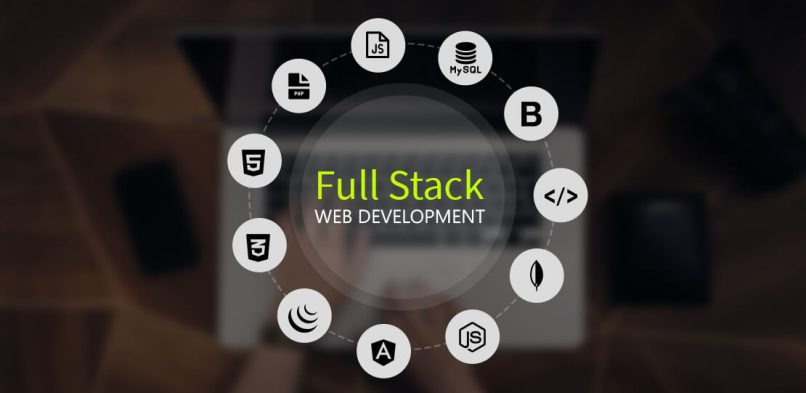
Frontend development is the part of the application users directly interact with. It includes layout, navigation, forms, buttons, animations, and responsiveness. In full stack web development, frontend is not just about design but also about usability and performance.
Every time a user types text, clicks a button, or scrolls a page, frontend code handles the interaction. A full stack developer must understand how browsers render content and how users experience interfaces across different devices.
Good frontend development improves engagement, reduces errors, and makes applications easier to use.
Core Frontend Technologies in Full Stack Web Development
The foundation of frontend development consists of three technologies. HTML structures the content, CSS styles the layout, and JavaScript adds behavior. These are mandatory skills in what is full stack web development.
HTML defines headings, forms, tables, and page structure. CSS controls spacing, colors, fonts, and responsive design. JavaScript enables dynamic features like form validation, real-time updates, and interactive components.
Without strong fundamentals in these technologies, full stack development becomes unstable and inefficient.
Frontend Frameworks and Libraries
As applications grow, managing raw JavaScript becomes difficult. Frameworks solve this by organizing code and improving performance. In full stack web development, frontend frameworks help build scalable user interfaces.
React focuses on reusable components and fast rendering. Angular provides a structured framework suitable for large applications. Vue offers flexibility and simplicity for rapid development. Each framework has trade-offs, and full stack developers choose based on project needs.
Framework knowledge allows developers to build complex interfaces without sacrificing maintainability.
Backend Development in Full Stack Web Development
Backend development handles everything users do not see. It processes requests, applies business rules, manages authentication, and communicates with databases. In what is full stack web development, backend is where application logic lives.
Whenever a user logs in, places an order, or updates a profile, backend code verifies permissions, processes data, and returns responses. A poorly designed backend can break even the best frontend.
Backend development requires careful planning to ensure security, reliability, and scalability.
Backend Languages and Frameworks
Multiple languages support backend development. Node.js allows JavaScript to run on servers, creating a unified language across frontend and backend. Python offers simplicity and readability, often used in data-driven applications. Java is common in enterprise systems, while PHP remains popular for content-heavy websites.
Frameworks like Express, Django, Spring Boot, and Laravel simplify backend tasks by providing routing, security, and database tools. In full stack web development, developers typically specialize in one backend ecosystem while understanding others.
Choosing the right backend stack directly impacts performance and long-term maintenance.
Databases in Full Stack Web Development

Databases store the information that applications depend on. User accounts, transactions, messages, and records all live inside databases. Full stack web development requires understanding how data is structured and accessed.
Relational databases store data in tables with fixed relationships. Non-relational databases store flexible documents. Each type serves different use cases. Selecting the wrong database can cause scaling issues and performance problems.
Full stack developers must understand how frontend actions translate into database operations and how to optimize queries.
Data Modeling and Storage
Data modeling defines how information is organized. Good models reduce redundancy and improve performance. In what is full stack web development, data modeling is a critical skill because it connects backend logic with persistent storage.
Poor data design leads to slow queries, inconsistent records, and difficult maintenance. Strong data modeling improves system stability and scalability.
Understanding storage is as important as writing application logic.
APIs and Communication Between Systems
APIs allow different parts of an application to communicate. They define how frontend requests data and how backend responds. In full stack web development, APIs are the backbone of system integration.
REST APIs use standard HTTP methods to send and receive data. GraphQL allows clients to request only the data they need. Both approaches are widely used in modern systems.
Clear API design reduces errors and improves collaboration across teams.
Authentication and Security in Full Stack Web Development
Security is a shared responsibility across the stack. Full stack developers must understand authentication, authorization, and data protection. Weak security can compromise entire systems.
Authentication verifies identity. Authorization controls access. Encryption protects sensitive data. In what is full stack web development, security cannot be ignored because vulnerabilities often appear at the boundaries between frontend and backend.
Secure applications build trust and prevent costly breaches.
Deployment and Hosting
After development, applications must be deployed to live environments. Full stack web development includes understanding how code moves from a local machine to a production server.
Deployment involves servers, cloud platforms, environment variables, and monitoring. Even small deployment mistakes can cause downtime or data loss.
Developers who understand deployment can maintain systems more reliably and respond faster to issues.
Version Control and Collaboration
Version control systems track code changes and support collaboration. Full stack web development relies heavily on version control to manage complex projects.
Using version control allows teams to work simultaneously, review changes, and roll back errors. It also provides documentation of how systems evolve over time.
Without version control, full stack projects become unmanageable.
Case Study: Full Stack Web Development in a Real Application
Consider an online learning platform. Students register, enroll in courses, watch videos, and submit assignments. The frontend displays dashboards and lessons. The backend manages users, payments, and progress tracking. The database stores course content and user records. Deployment ensures global access.
A full stack developer understands how each part supports the others. This system-level view is the core value of full stack web development.
Skills Required for Full Stack Web Development
Full stack development requires technical breadth and logical thinking. Developers must move between interface design, server logic, and data management.
Essential skills include frontend fundamentals, backend programming, database management, API design, and debugging. Soft skills such as communication and problem-solving are equally important.
Learning what is full stack web development means learning how systems interact, not just memorizing tools.
Advantages of Full Stack Web Development
Full stack developers offer flexibility and efficiency. They reduce handoffs between teams and speed up development cycles. This makes them valuable in fast-paced environments.
They also understand trade-offs better because they see how decisions affect the entire system. This leads to better architectural choices.
Limitations and Challenges
Full stack development is demanding. Keeping up with multiple technologies requires constant learning. Developers must balance depth and breadth carefully.
Large-scale systems often require specialists. Full stack development works best when applied thoughtfully rather than forced everywhere.
Understanding limitations helps developers grow sustainably.
Career Path and Future Scope
The demand for full stack web development continues to grow. Companies seek developers who can adapt, learn quickly, and work across systems.
Career paths include software engineer, technical lead, and product-focused roles. Full stack skills also support entrepreneurship and freelance work.
Knowing what is full stack web development opens multiple professional opportunities.
Final Thoughts
What is full stack web development is about understanding and building complete web systems. It combines frontend design, backend logic, databases, APIs, security, and deployment into one coherent skill set.
This approach creates developers who think holistically, solve real problems, and build reliable applications. With the right learning path and practice, full stack web development becomes a powerful and future-proof career choice.