

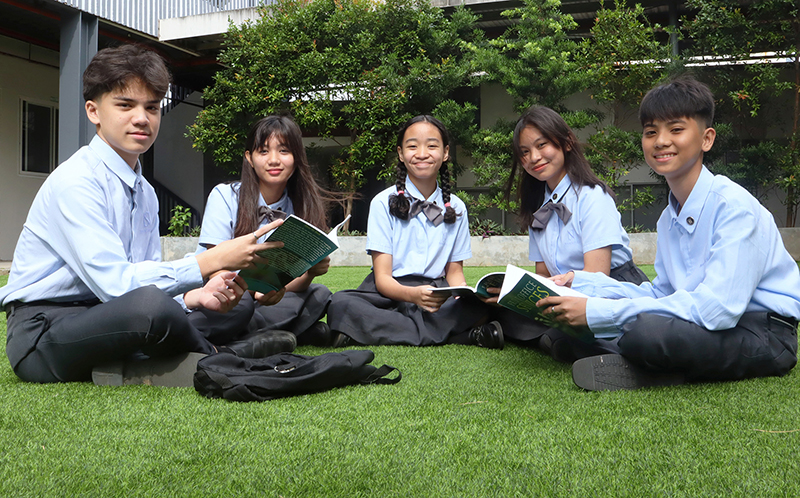
Nova Scola is an educational concept drawing attention for its fresh, innovative approach. This modern “new school” philosophy blends STEM (science, technology, engineering, and math) with classical studies, aiming to foster a deep, meaningful understanding rather than rote memorization. In Nova Scola classrooms, students tackle real-world projects and explore the arts and humanities alongside science, fostering a balanced skill set and a passion for learning. This holistic approach positions Nova Scola as a transformative model in modern education.
| Aspect | Details |
|---|---|
| Name | Nova Scola (Latin for “New School”) |
| Concept | A contemporary education philosophy blending traditional and innovative teaching |
| Focus | Interdisciplinary learning (integrating STEM with classical subjects) |
| Emphasis | Critical thinking, creativity, emotional intelligence, and personalized growth |
| Goal | Cultivate adaptable, intellectually rigorous learners ready for future challenges |
Understanding Nova Scola
At its core, Nova Scola reimagines traditional schooling. The term Nova Scola literally means “new school,” signaling a break from old models. It’s best understood not as a single campus, but as an educational philosophy that prioritizes the whole student. One description explains that it “integrates modern STEM education (science, technology, engineering, and mathematics) with classical studies such as logic, philosophy, history, and literature” to develop learners who are “intellectually rigorous, adaptable, and ethically grounded”. In practice, Nova Scola emphasizes creativity and life skills alongside academics, adapting lessons to students’ interests and real-world needs.
Philosophy and Core Principles
Nova Scola’s approach is built on several key principles that fuel its holistic vision. First, it values cognitive depth over breadth: students spend more time mastering a few core concepts deeply, rather than skimming many topics. Second, it integrates STEM with the humanities – lessons explicitly connect math and science with history, literature, art and ethics. Third, it uses structured thinking: formal logic, debate and argumentation are woven into learning so students sharpen their reasoning in every subject.
Core PrincipleDescription
Cognitive Depth: Master key concepts in detail, instead of memorizing many facts.
Integrated Curriculum Blend STEM with philosophy, history and the arts for richer, connected learning.
Structured Thinking: Teach logic and debate skills to help students analyze evidence and make decisions systematically.
Nova Scola treats learning as a personalized, social process. Classes encourage teamwork, discussion, and reflection in addition to traditional academics. For example, students might debate ethical questions after a science experiment, building empathy and communication skills alongside content knowledge. By blending critical thinking and creativity with academic rigor, Nova Scola aims to produce learners who are confident in STEM and the arts, and thoughtful about the world around them.
Curriculum and Teaching Methods
Nova Scola’s classrooms look very different from typical schools. Rooms are arranged for collaboration (flexible seating, group workspaces, etc.). Project-based learning is the norm: instead of passive lectures, students work on hands-on projects over weeks or months. For example, a class might spend a month designing a model sustainable city, learning physics (solar panels), math (budgeting) and environmental science all at once. These projects bridge school with real life, making education engaging and relevant. Teachers act as guides or mentors, supporting student-driven inquiry rather than just lecturing.
Another hallmark is personalization. Nova Scola often allows students to choose their own paths within a framework. A student interested in robotics might combine coding classes with hands-on engineering projects and even a history unit on automation. Another who loves writing could blend literature and social studies in a community-storytelling project. Educators tailor projects to each class’s interests and culture. Peer collaboration is strongly encouraged: group projects and discussion circles allow students to teach each other, fostering teamwork and social skills. Digital tools and platforms support these experiences – for instance, online simulators, maker-spaces or global video exchanges help students connect and learn beyond the classroom. Technology is used as a tool, not a crutch: in Nova Scola, digital platforms support exploration, but teachers remain central to guiding learning.
STEM and Classical Integration
A unique feature of Nova Scola is its explicit fusion of modern science with classical studies. Instead of isolated subjects, lessons cross boundaries. For example, a unit on climate change might include:
- Mathematical analysis of environmental data.
- Computer science projects on climate modeling.
- Historical studies of past industrial revolutions.
- Ethics discussions on human impact and policy.
This interdisciplinary approach ensures students do more than memorize facts – they see how ideas apply and interact. As one observer notes, blending these areas “helps learners develop a well-rounded perspective that enhances problem-solving skills”. By understanding how math, science, history and ethics connect, students gain a deeper, more flexible grasp of the subject.
Benefits and Impact
Nova Scola’s model offers several important benefits. Engagement skyrockets when students see real-world relevance in their work. For instance, educators report that Nova Scola programs have rapidly growing enrollment as learners are drawn to the active, project-based environment. Graduates of these programs often walk away with strong interdisciplinary skills:
- Analytical and reasoning skills across multiple subjects.
- Ability to evaluate complex information, spotting misinformation and bias.
- Career readiness for diverse and evolving fields.
- Ethical and social awareness in technological decision-making.
In short, Nova Scola students become well-rounded problem-solvers. They often develop greater confidence and adaptability. Small class sizes and one-on-one mentoring (common in Nova Scotia settings) help each student grow. Many alumni credit Nova Scola with igniting their love of learning and preparing them for real-world challenges. Employers and universities note that these students are adaptable and excel in roles requiring creativity and critical thinking, rather than just narrow technical skills.
Nova Scola vs Traditional Education
Nova Scola shifts educational priorities in clear ways. The table below highlights key differences:
| Aspect | Traditional Education | Nova Scola |
|---|---|---|
| Primary Focus | Technical skills, grades, standardized tests. | Reasoning, context and application. |
| Role of Humanities | Often optional or minimized. | Core part of curriculum – history, literature and ethics are woven into STEM learning. |
| Teaching Method | Lecture and memorization; teacher as authority. | Project-based, collaborative learning; teacher as guide. |
| Assessment | Rigid testing at set intervals. | Diverse evaluation (portfolios, projects, presentations, ongoing feedback). |
| Goal | Prepare students for exams and existing jobs. | Cultivate adaptable thinkers and lifelong learners prepared for an uncertain future. |
Challenges and Considerations
Adopting Nova Scola brings hurdles. Resistance to change is common: teachers, parents, and administrators accustomed to conventional methods may be skeptical. Teacher training is essential: educators must learn to lead open-ended projects, use new technologies effectively, and assess students flexibly. Without strong professional development, the approach can falter.
Assessment is another concern. Standard grades and tests don’t capture the full picture of a Nova Scola education. Schools must develop new metrics (like student portfolios or project scores) and convince districts or accrediting bodies to accept them. There is also a resource cost: smaller classes, project materials and technology tools can be expensive. Many Nova Scotia–style programs begin as private or pilot initiatives for this reason. However, with careful planning and evidence of success, some schools are gradually adopting Nova Scola ideas alongside traditional methods.
Nova Scola and Global Trends
Interest in Nova Scola is growing worldwide. Educators internationally are already talking about more adaptable, relevant learning. Nova Scola aligns with trends like personalized learning, 21st-century skills (critical thinking, digital literacy), and even global citizenship. Students often work on projects with a worldwide context (e.g., sustainability or cultural studies), giving them a broader perspective. As one report notes, Nova Scola is “at the forefront of redefining education on a global scale,” blending innovation with timeless values.
Facing rapid automation and social change, many schools see Nova Scola’s focus on ethics and adaptability as key. By integrating topics such as environmental stewardship and data privacy into everyday lessons, Nova Scola helps students tackle tomorrow’s problems. Its flexible, interdisciplinary projects encourage collaboration across cultures. In short, Nova Scola provides a blueprint for making education more resilient and forward-thinking in a rapidly changing world.
Conclusion
Nova Scola represents a bold step forward in education. It refuses to lock students into a single track; instead, this “new school” approach blends traditional academics with innovative, project-based learning, always keeping curiosity and creativity at the center. While it has challenges like any new model, early success stories hint at its promise: graduates often become lifelong learners and confident problem-solvers. The growing global interest suggests this model is here to stay. In fact, Nova Scola stands at the forefront of the educational revolution, charting a new course for schools of the future.
FAQs
What is this new approach to learning?
Nova Scola is an educational model or philosophy that mixes traditional subjects (history, literature, etc.) with modern STEM learning. It emphasizes hands-on, student-centered projects and critical thinking instead of rote memorization.
How does this model differ from traditional schooling?
In a typical school, teachers lecture and students study for tests. Nova Scola uses collaborative projects and real-world challenges instead. Teachers act as mentors as students explore topics across different disciplines. In practice, it “blends innovative teaching methods with traditional values” for a richer experience.
What are the benefits of this approach?
Students often develop stronger analytical thinking, creativity and communication skills. Because learning is relevant and interactive, engagement is higher. Graduates of Nova Scola programs are typically well-prepared for future careers, armed with both technical knowledge and ethical reasoning.
What challenges does this approach face?
It requires well-trained teachers, new ways to assess learning, and often more resources than a standard school. Shifting from exams and lectures to open-ended projects can be hard for conventional schools to adopt quickly.
Who is this model intended to help?
Nova Scola can benefit all students, but it’s especially good for those who are curious, self-driven or hands-on learners. Its adaptable approach can support diverse learning styles. So far, it’s mostly used in innovative or private settings (which have more flexibility), but the core ideas can be applied in many contexts.
Is this approach likely to spread widely?
That remains to be seen, but interest is strong. Many educators believe Nova Scola addresses modern needs. Early adopters hope that demonstrating success will influence mainstream education. If trends toward innovation and personalization continue, models like Nova Scola could indeed become far more common.