

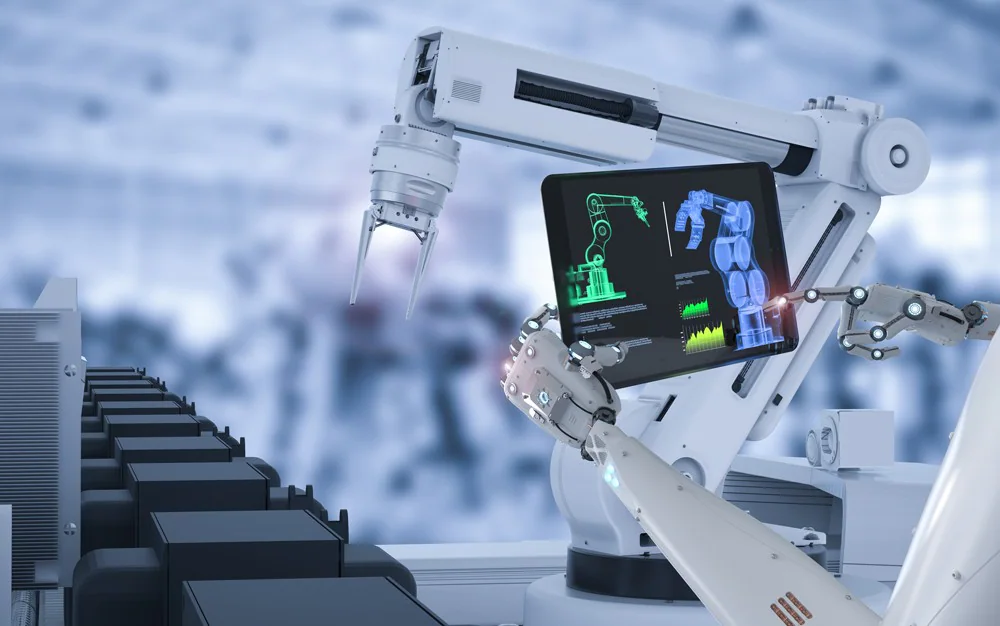
In this robot article, we explore cutting-edge developments that promise to shape our world. From self-learning machines to friendly cobots, the future of robotics is unfolding faster than ever. For readers curious about robots in future roles—whether in factories or our homes—this article on robotics covers definitions, types, pros and cons, and how artificial intelligence is transforming the field. Recent robotics news today is full of breakthroughs (like NVIDIA’s new open-source robot AI models), hinting at what lies ahead. In short, whether you work in engineering or simply wonder what the future of robots holds, this guide delivers a clear, friendly overview of everything you need to know.
| Aspect | Details |
|---|---|
| Robotics (definition) | A branch of engineering and computer science focused on designing and operating robots. |
| First programmable robot | Unimate (1961) – the first programmable robot arm used for welding, which launched modern robotics. |
| Global robot usage | Nearly 4.66 million industrial robots were operating worldwide by 2024, with 542,000 new installations that year. |
| Common applications | Manufacturing automation (welding, assembly), home/service robots (vacuum cleaners, lawnmowers), medical surgery bots, exploration (drones/rovers). |
| Future trends | AI-powered autonomy, human-robot collaboration (cobots), advanced perception and learning in robots. |
What is Robotics?
Robotics blends engineering, science, and AI to build machines that move and think. In simple terms, robotics is the study of robots – mechanical devices that perceive their environment, process information, and act on it. According to industry experts, “Robotics is a branch of engineering and computer science that involves the conception, design, manufacture and operation of robots”. These robots can be industrial arms in factories, service bots in hospitals, or experimental machines like self-driving vehicles.
Robotics has a rich history. Karel Čapek’s 1920 play introduced the word “robot,” but real robots came later. The first programmable industrial robot, Unimate, was created in 1961 to automate welding tasks. A few years later, Shakey became the first mobile robot in 1966, thanks to advances that allowed it to sense obstacles. Today’s robots are far more advanced, thanks to powerful CPUs, sensors, and AI algorithms.
Robots range from tiny automated vacuums to giant factory arms. Despite this variety, the core idea is the same: give machines sensors and control software so they can perform tasks, often ones that are repetitive, dangerous, or too precise for humans. In real life, you might already interact with robots without realizing it: robotic arms in manufacturing lines, household robot vacuum cleaners, and surgical robots in operating rooms are all examples.
Types of Robots
Robots come in all shapes and sizes, each designed for specific tasks and environments. Common categories include:
- Industrial Robots: Often seen in factories and warehouses, these industrial robots perform tasks like welding, painting, assembling, and material handling. They are usually robotic arms fixed to one spot and are crucial for mass production.
- Service Robots: These are robots for non-manufacturing tasks. Examples include home robots (like robotic vacuums), hospital assistant robots, and entertainment robots. They help with cleaning, healthcare, customer service, and more.
- Medical Robots: These robots assist in healthcare, from surgical robots performing precise operations to rehabilitation exoskeletons helping patients walk. They improve accuracy in surgery and can reach places inside the body that human hands can’t.
- Autonomous Vehicles: Self-driving cars, delivery drones, and other autonomous mobile robots fall here. They navigate and make decisions using sensors and AI, aiming to reduce accidents and improve logistics.
- Humanoid Robots: Designed to look or move like humans, these robots (like Honda’s ASIMO or Boston Dynamics’ Atlas) mimic human actions. They are still largely experimental but demonstrate human-robot interaction possibilities.
- Collaborative Robots (Cobots): Unlike most robots that work alone, cobots share the workspace with humans, assisting on assembly lines and easing tasks. For example, a cobot arm might handle heavy lifting while a human worker controls it or performs fine manipulation.
- Agricultural Robots: These robots handle farming tasks (planting, harvesting, weeding) to increase food production efficiency. Automated tractors and drone sprayers fall into this group.
- Exploration Robots: Space rovers on Mars and underwater drones are built to explore places unsafe for humans. They expand human knowledge of far-off planets and ocean depths.
- Defense and Military Robots: Used for surveillance, bomb disposal, and search-and-rescue in dangerous areas. They help keep human soldiers safe.
- Educational Robots: Simple robots and kits used in schools and makerspaces to teach kids programming and engineering.
- Entertainment Robots: Toy robots and animatronics for fun. Examples include robotic pets and theme park figures.
These are just a few examples. Essentially, robots are specialized to meet specific needs in the robotics future, whether that’s scanning inventory in a warehouse or delivering packages on a sidewalk. Technologists constantly dream up new categories – for instance, soft robots made of flexible materials or social robots that interact like companions.
Advantages and Disadvantages of Robots
Robots offer many advantages:
- Increased Productivity: Robots excel at repetitive, high-precision tasks, enabling 24/7 production without fatigue. In factories, robots can weld or paint consistently, dramatically speeding up output. For instance, modern industrial robots can operate around the clock, cutting downtime and boosting overall efficiency.
- Improved Quality and Consistency: A robot performs the same motion with exact accuracy each time, reducing defects. In manufacturing, this means tighter tolerances and higher quality products. Vision-guided robots can inspect parts with detail far beyond human capability, catching flaws early.
- Safety: Robots can take on dangerous jobs that would risk human health. They work in hazardous environments (e.g., handling toxic substances, heavy lifting, or bomb disposal) so people don’t have to. The result is fewer workplace injuries. For example, using robotic arms for lifting or chemical spraying removes workers from harm’s way, leading to a safer work environment.
- Cost Efficiency (Long-Term): Although upfront costs are high, robots can lower long-term costs. They reduce labor expenses, scrap rates, and downtime. A well-integrated robot system often pays for itself through fewer errors and constant operation. Over time, companies often find that automation cuts waste and improves yield.
- Complex Task Handling: With advanced AI, robots can now manage tasks once thought impossible. For example, some robots can navigate complex terrains, perform delicate surgery, or handle microscopic assembly. AI-driven robots will only get more capable, tackling tasks that require perception and decision-making.
However, there are also disadvantages:
- High Initial Investment: Buying and integrating robots is expensive. Costs include the robot itself, software, installation, and safety measures. Small businesses may struggle to justify the investment. Upfront costs like custom tooling and programming can be significant obstacles.
- Maintenance and Expertise: Robots require skilled technicians for programming, maintenance, and repairs. As one industry note explains, “there will be a greater need for skilled technicians to program, maintain, and repair” these machines. Companies must invest in training or hiring specialists. If a robot breaks down, production can halt until experts fix it.
- Job Displacement: As robots take over manual tasks, some routine jobs may disappear. Studies warn that by 2030 up to 30% of jobs could be automated. For example, if robots weld car frames, fewer human welders are needed. While new jobs emerge in programming and oversight, the transition can be challenging for workers.
- Lack of Flexibility: Traditional robots can only do what they are programmed to do. If processes change or products vary, the robots must be reprogrammed. They lack the common-sense flexibility of humans. Also, robots can struggle in unstructured or unpredictable environments unless equipped with advanced sensors and AI.
- Dependency and Maintenance Issues: Relying heavily on robots means production can be disrupted if a critical robot fails. Regular maintenance is a must, and unexpected breakdowns can be costly.
Understanding these pros and cons helps companies and individuals decide where robots make sense. In practice, the balance is shifting as smart robots become cheaper and more capable, making their advantages outweigh the drawbacks in many industries.
The Future of Robotics: What’s the Use of AI in Robotics?
Artificial intelligence (AI) and machine learning are driving the future of robotics. In this context, AI gives robots a “brain” so they can perceive, learn, and make decisions, not just follow rigid instructions. As one expert explains, robotics provides the physical platform
Computer Vision and Environmental Perception
AI-powered vision systems allow robots to see and interpret the world. Robots can identify and classify objects, read text, or recognize faces. For example, a manufacturing robot can use cameras and ML algorithms to spot a misplaced part or adjust its grip on a delicate item. As one summary notes, machine learning enables environmental perception: algorithms process data from sensors to identify objects and people. This makes robots much more adaptable – instead of hitting a fixed set of coordinates, they can adjust in real time.
Dexterous Manipulation
Machine learning helps robots gain fine motor skills. Traditional robots follow pre-set motions; with AI, they learn how to handle objects without breaking them. For instance, a robotic hand can learn how to grip a glass or pick ripe fruit by adjusting pressure and angle. This “task optimization” via learning means robots improve over time.
Autonomous Navigation
AI enables self-driving motion. Robots can analyze sensor data (like LIDAR or cameras) to map their surroundings and plan safe paths. Delivery drones and autonomous warehouse vehicles use ML to avoid obstacles. According to experts, machine learning helps robots “learn from experience, improving over time through reinforcement learning” so they can navigate complex spaces with minimal human input.
Natural Language and Interaction
Some robots use natural language processing (NLP) so they can understand spoken or written commands. AI allows personal assistants (like smart speakers) to be considered simple robots. In advanced research, humanoid robots use NLP and context awareness to interact with people, making them better coworkers or companions.
Predictive Maintenance and Optimization
AI analyzes data from a robot’s operation to predict when it needs servicing before it breaks. This improves uptime. Machine learning models can also optimize entire processes – for example, adjusting a manufacturing line’s parameters for peak efficiency on the fly. As Robotnik notes, ML enables predictive maintenance: analyzing patterns to anticipate failures and optimize planning.
A Word About Robot Software
When people say robot they often imagine a physical machine. But in the robotics field software is just as important.
Embedded Robot Software:
Physical robots run on software too. This includes the code that controls motors, processes sensor data, and implements algorithms. Engineers write programs in languages like C++, Python, or specialized robotics languages to define a robot’s behavior. For example, the Robot Operating System (ROS) is a popular open-source framework that helps developers build complex robot software. Good robot software ensures that the hardware performs tasks safely and efficiently.
Software Robots (Bots/RPA):
These are not physical robots at all, but programs that automate digital tasks. As one source clarifies, “software robots are computer programs that perform tasks without human intervention, such as web crawlers or chatbots”. These “bots” run on servers or your PC, automating routine tasks like data entry or customer responses. For instance, an insurance company might use a software robot to automatically process claims forms, much like an assembly-line robot processes parts – except it’s all virtual. These are sometimes called RPA (Robotic Process Automation) bots.
The Future of Robotics and Robots
Thanks to AI, sensor advances, and cheaper hardware, robots will become more common collaborators in our lives. Improved sensor technology and AI mean that “robots will keep moving from mere rote machines to collaborators with cognitive functions”. In other words, the robots of tomorrow will be smarter and more versatile.
Here are some predictions and trends for the future of robotics and robots:
More Human-Robot Collaboration
Rather than replacing humans, many experts foresee robots working alongside us. Cobots (collaborative robots) will handle heavy lifting or precision work while humans do tasks requiring creativity or complex judgment. For instance, in a car factory, a robot might weld frames while a human worker programs and supervises it. This collaboration opens new job roles: as Simplilearn notes, while there might be “fewer human workers welding automobile frames, there will be a greater need for skilled technicians to program, maintain, and repair” the machines. So the workforce shifts toward technical and oversight jobs.
Smarter and More Versatile Machines
The robotics future includes robots that learn continuously. Research groups are developing robots that learn from large datasets and adapt on the fly. NVIDIA’s recent release of the open-source Newton physics engine and the Isaac GR00T reasoning model is one example. These tools help robots simulate complex tasks (like walking on uneven ground) and break down instructions into steps. The goal is robots that understand common sense and can adjust to new environments without reprogramming.
Expansion into New Fields
We’ll see robots in ever more areas. Medical robots are on the rise – for instance, tiny robots that dissolve kidney stones are in development, potentially avoiding surgery altogether. In agriculture, more robots will monitor crop health and pick produce. Service robots will enter hotels and homes, helping with cleaning, security, or even companionship. Autonomous vehicles (cars, delivery drones) are also robotics in a broader sense, transforming transport. Even in space, robots will continue to explore distant worlds, building habitats or collecting samples.
Economic Impact
Robots are expected to boost productivity globally. A recent report projects that robots and AI will increase economic growth and create new career opportunities. However, there is debate: some studies warn about 20-30 million manufacturing job losses by 2030 to automation. The general outlook is that, while some jobs vanish, the economy will generate new skilled positions (in AI, robot programming, maintenance, etc.). Training and reskilling programs will be essential so workers can transition into these new roles.
Enhanced Everyday Life
On a consumer level, robots will become commonplace at home and work. Imagine household robots that cook, clean, or tutor kids, and personal assistants that physically interact with you (not just voice-activated speakers). Already, robots like smart vacuums and lawn mowers are common. Future versions might handle more chores autonomously.
Ethical and Social Considerations
With all these changes come questions. How will society adapt to robots caring for the elderly or driving our cars? Who is responsible if a robot causes harm? These issues will become important as robots enter everyday life. Many experts emphasize the need to focus on trust and safety in robotics. In fact, some companies are investing in safety solutions; for example, FORT Robotics raised $18.9 million to improve safe robot control. Transparent regulations and public discussions will be needed to navigate the ethical landscape of the robotics revolution.
Choose the Right Program
If you’re inspired and want to join the robotics revolution, choosing the right educational path is key. Robotics is multidisciplinary, so you have options:
Robotics/Mechatronics Degrees
Some universities offer dedicated robotics programs or majors. Top schools for robotics engineering include Carnegie Mellon University, Stanford, Georgia Tech, and others. These programs combine mechanical engineering, electrical engineering, and computer science courses. They often have labs where students build robots, and access to research in fields like AI and control systems. A degree in mechatronics or robotic engineering teaches you everything from circuit design to AI algorithms, preparing you for cutting-edge work.
Computer Science with AI Focus
Since modern robots rely heavily on software, a CS degree (especially with machine learning and AI classes) is also valuable. This path emphasizes algorithms, programming, and AI theory – essential for writing the “brain” of a robot. Many robotics software platforms (like ROS) use C++ and Python, so these languages are a priority. If you enjoy coding and AI, this is a strong choice.
Electrical/Electronics Engineering:
Robots are full of sensors, circuits, and hardware. An EE background helps you understand motor controllers, embedded systems, and sensor integration. You might work on designing the actual electronics and firmware in a robot. Courses in control systems, signal processing, and robotics hardware are typical.
Mechanical Engineering
Robots are physical machines, so mechanical engineering is at the core. ME programs teach dynamics, kinematics, materials, and manufacturing. If you want to design robot bodies or understand gears and arms, ME with a robotics emphasis fits. You might take classes on machine design, pneumatics, or 3D printing (useful for robot parts).
Online Courses and Certifications
If a full degree isn’t practical, there are many online resources. For example, courses on Coursera, edX, or Udacity cover robotics and AI concepts. Learning platforms often offer certificates in robotics fundamentals, ROS programming, or AI for robotics. Specialized bootcamps and workshops (like Simplilearn’s courses) can also jump-start skills.
Programming Skills
Across all programs, strong programming ability is crucial. As one robotics expert points out, “C and C++ are required languages in robotics” because so many robot libraries and hardware interfaces use them. Python is also critical – it’s the other “main language” of ROS. Knowing how to code, debug, and work with Linux/ROS will set you apart.
How to Get Started in Robotics
You might be wondering: How do I jump into this field? The good news is there are many paths to begin building and learning about robots. Here are some practical steps you can take right away:
- Build Simple Robots and Kits: A great way to learn is hands-on tinkering. Start with a programmable robot kit or electronics project. For beginners, kits like LEGO Mindstorms, Arduino-based robots, or Raspberry Pi projects are affordable and educational. Even if you’re new to coding, these kits teach basic mechanics and programming. As one robotics guide recommends, “the best introduction to robots is to just start experimenting… even a pile of loose motors and sensors” can be a learning playground.
- Join Robotics Competitions or Clubs: Look for local or online robotics clubs and competitions (like FIRST Robotics, VEX, or Maker Faires). These communities are welcoming to newcomers and often mentor students. By participating, you’ll build teamwork and problem-solving skills while actually constructing a robot for a challenge. Many engineers got started by working on a robotics team in high school or college – it’s both fun and educational.
- Learn to Code and Use Robot Software: Begin learning programming languages common in robotics. Python is a great starting point because it’s easy to pick up and used in many robot platforms. As you progress, learn C/C++ for performance-critical tasks. Additionally, explore the Robot Operating System (ROS), an open-source framework widely used in research and industry. ROS tutorials can teach you how robots handle sensors and control.
- Take Courses and Online Resources: Enroll in online courses on robotics and AI. Many universities offer free lectures or MOOCs on these topics. YouTube channels and tutorials can teach basics of electronics, coding, and robot mechanics. Even introductory classes in math (linear algebra, calculus) and physics (mechanics) will help you understand how robots move and calculate.
- Join the Community: Engage with the global robotics community. Websites, forums, and social media groups (like the IEEE Robotics & Automation community) are full of hobbyists and professionals sharing ideas. You can learn from their projects, ask questions, and even find mentors. Online communities often have sections for beginners and can guide you through initial projects.
Conclusion
The key is to start practically. If you’re a student, see if your school offers any robotics classes or a makerspace. If you’re self-learning, set a small project goal (e.g., make a robot car follow a line). Each small success teaches you more. Remember, many successful roboticists began by simply doing – tinkering with cheap parts or learning from open-source projects.
As IEEE’s robotics guide notes, the field is “growing at a steady pace” and “new types of robots emerge, [promising] big impact on healthcare, manufacturing, education, transportation,” and more. So there’s never been a better time to get started. Whether you dream of creating the next generation of drones or automating agriculture, take that first step today – the robotics future awaits you.